Ninebark is a very intentional vineyard.
In 2005, we decided that we really wanted to grow Oregon winegrapes and be part of the growing community of grape growers and wine makers in the Northwest. We spent several years searching, driving all over the Willamette Valley looking for just the right spot; it had to have volcanic soil and a variety of aspects, as well as enough room to follow our plant nerd interests in growing many different grapes and clones.
Once we found this 100-acre derelict walnut orchard in 2007, we knew what to do next. Save money like crazy, because it was going to be expensive.
We cleared out those old trees, really just big stumps impossibly encrusted with blackberries, and found a wheat farmer to keep the land "tamed" until the time was right. We put in the infrastructure and bought a tractor and other equipment. We spent hours and hours discussing layout, clones, row width, row direction, etc.
Finally, in 2014, exactly 100 years after the land was originally settled by a farming family from Michigan, we planted 6.5 acres of grapevines on a freezing and icy November day.
We've done 5 more plantings since then, for a total of 25 acres of grapes including 6 different clones of Pinot Noir, 3 different clones of Chardonnay, and other grape varieties including Pinot Meunier and Melon de Bourgogne. After each planting, we're pretty sure we're done expanding, but the results have been so good, we can't help but add "just a few" more grapevines.
Location
The vineyard is on the western slope of the Chehalem Mountains AVA, just north of Ribbon Ridge near the town of Laurelwood and looked over by Bald Peak (the highest point in the Willamette Valley). Nearby vineyards include Colleen Clemens and Patton Valley. We have a unique corner of the Chehalem Mountains AVA practically all to ourselves and as the vines get older and their roots go deeper, we're slowly discovering the qualities and characteristics of wine made from these grapes. It's an exciting process.
Elevation
Current plantings range from 530-650 feet.
Soil
The soil across all our vine-suitable areas is Saum, a red-brown volcanic silt loam similar to Jory, but with a bit less water-holding capacity. A few sections of the vineyard contain large basalt boulders.
For more information about the site and the plantings, including block maps, heat hours, clones and soils, check out out the Ninebark Vineyard page on Everyvine. Also, you can view the current block map here.
Farming Practices
We are LIVE certified and Salmon Safe and have been farming the grapes following LIVE standards from the beginning. For a variety of reasons, including sustainability and flavor profile, we chose not to irrigate. We feel that if the vines can get established, they should perform solidly with their deep roots in even the hottest summers...and hopefully have more intense flavors as well. We are also a glyphosate-free vineyard.
Management
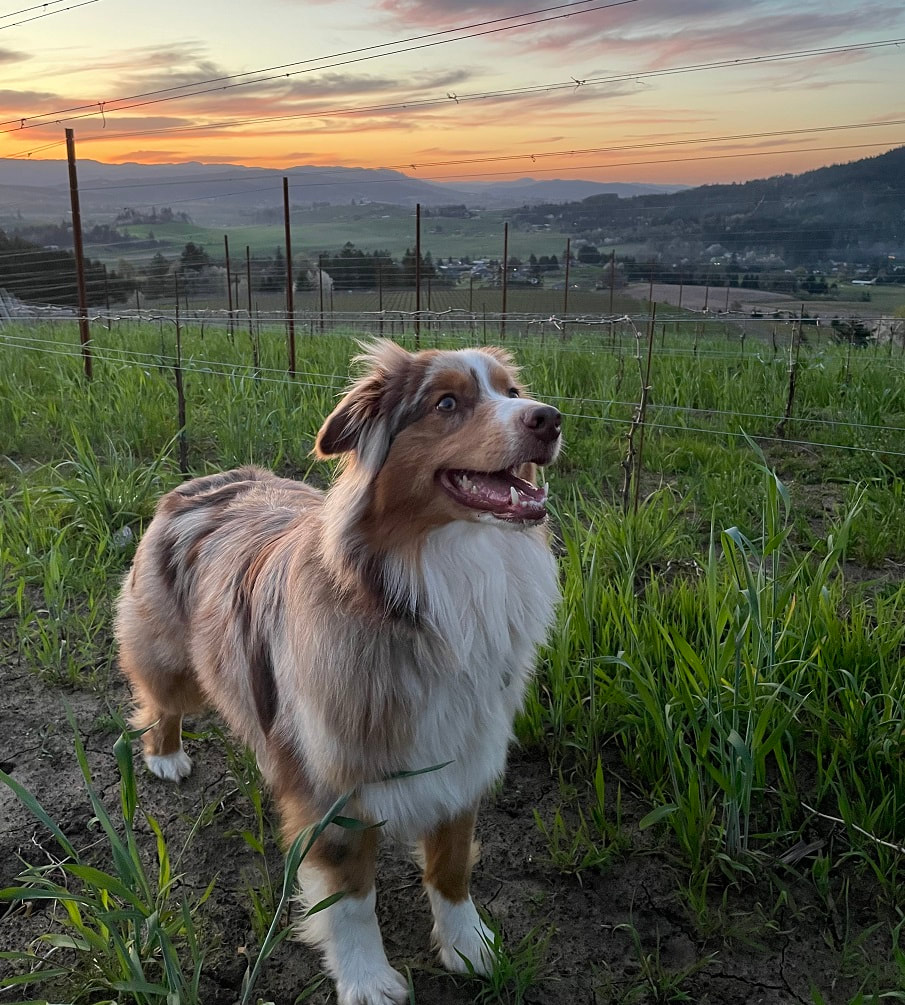
Results Partners has managed the vineyard since the beginning, though Rowan, the vineyard pup, runs the place.
In 2005, we decided that we really wanted to grow Oregon winegrapes and be part of the growing community of grape growers and wine makers in the Northwest. We spent several years searching, driving all over the Willamette Valley looking for just the right spot; it had to have volcanic soil and a variety of aspects, as well as enough room to follow our plant nerd interests in growing many different grapes and clones.
Once we found this 100-acre derelict walnut orchard in 2007, we knew what to do next. Save money like crazy, because it was going to be expensive.
We cleared out those old trees, really just big stumps impossibly encrusted with blackberries, and found a wheat farmer to keep the land "tamed" until the time was right. We put in the infrastructure and bought a tractor and other equipment. We spent hours and hours discussing layout, clones, row width, row direction, etc.
Finally, in 2014, exactly 100 years after the land was originally settled by a farming family from Michigan, we planted 6.5 acres of grapevines on a freezing and icy November day.
We've done 5 more plantings since then, for a total of 25 acres of grapes including 6 different clones of Pinot Noir, 3 different clones of Chardonnay, and other grape varieties including Pinot Meunier and Melon de Bourgogne. After each planting, we're pretty sure we're done expanding, but the results have been so good, we can't help but add "just a few" more grapevines.
Location
The vineyard is on the western slope of the Chehalem Mountains AVA, just north of Ribbon Ridge near the town of Laurelwood and looked over by Bald Peak (the highest point in the Willamette Valley). Nearby vineyards include Colleen Clemens and Patton Valley. We have a unique corner of the Chehalem Mountains AVA practically all to ourselves and as the vines get older and their roots go deeper, we're slowly discovering the qualities and characteristics of wine made from these grapes. It's an exciting process.
Elevation
Current plantings range from 530-650 feet.
Soil
The soil across all our vine-suitable areas is Saum, a red-brown volcanic silt loam similar to Jory, but with a bit less water-holding capacity. A few sections of the vineyard contain large basalt boulders.
For more information about the site and the plantings, including block maps, heat hours, clones and soils, check out out the Ninebark Vineyard page on Everyvine. Also, you can view the current block map here.
Farming Practices
We are LIVE certified and Salmon Safe and have been farming the grapes following LIVE standards from the beginning. For a variety of reasons, including sustainability and flavor profile, we chose not to irrigate. We feel that if the vines can get established, they should perform solidly with their deep roots in even the hottest summers...and hopefully have more intense flavors as well. We are also a glyphosate-free vineyard.
Management
Results Partners has managed the vineyard since the beginning, though Rowan, the vineyard pup, runs the place.